Anukampā is a Pāli word often translated as compassion. It carries a
deeper sense of care, a heartfelt response to the suffering and
vulnerability of life, and a wish for the wellbeing of ourselves and
others.
There is something beautiful in the way it points to compassion as an
inner movement, the heart naturally trembling when another person is
hurting. It can arise from a recognition that, beneath our different
circumstances and stories, we share many of the same human needs: to
feel safe, to belong, to be understood, to have dignity, and to
experience a sense of wholeness.
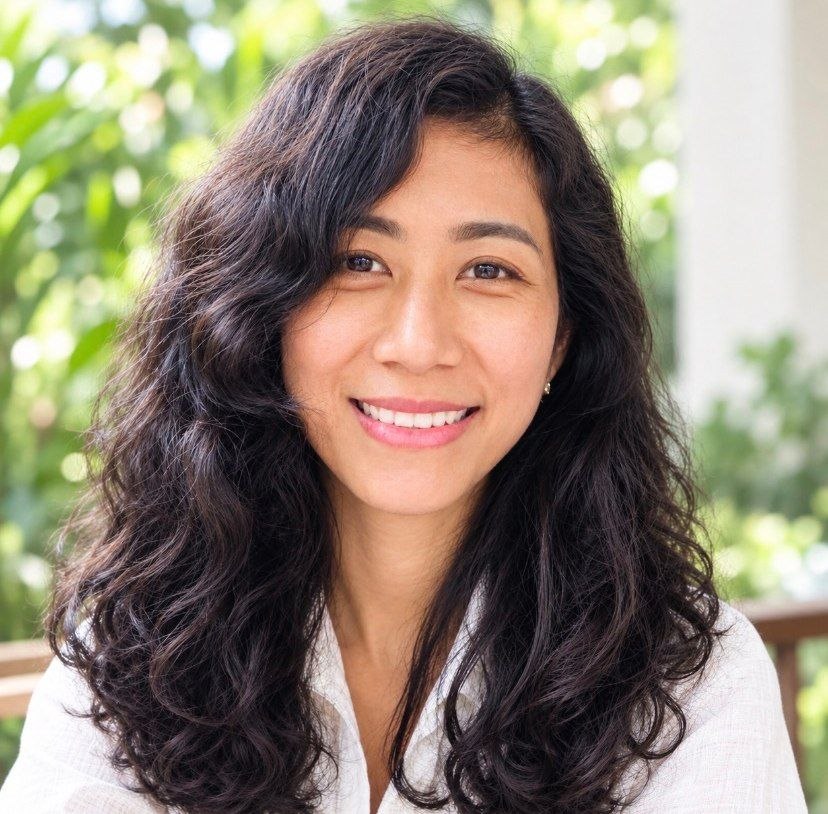
For me, Anukampā has gradually become a way of looking at life: to see
a little more deeply, to feel with an open heart, and to respond with
care.
This is why I chose Anukampā for this space. It reflects the journey I
am walking and the space I am creating, one that begins with
awareness, grows through compassion, and reminds us that we don't have
to go through everything alone.
I offer a space for people to meet themselves with compassion.
I use Compassionate Inquiry, Polyvagal-informed work, and
mindfulness to gently explore the patterns that shape our lives —
so you can be met as you are, without pressure to be fixed.
Healing begins when we bring compassionate awareness to our pain,
recognizing the protective patterns we developed and reconnecting
with the needs and wholeness beneath them.
My journey began long before I knew it was a journey.
Growing up near forest meditation monasteries, I was fortunate to
encounter meditation monks from a young age. The simplicity of their
way of life and the wisdom they shared left a quiet, lasting
impression on me. It awakened an early curiosity about the mind, about
suffering, and about whether there might be another way of meeting
life.
That curiosity eventually led me to practice under a forest meditation
monk who became one of my teachers. Through his guidance, I was
introduced more deeply to the ancient practices of Vipassanā and
Samatha. Over the years, meditation became a steady thread in my life,
accompanying me through many different seasons and quietly shaping the
way I came to understand myself and the world around me.
When I entered the humanitarian field, I had the opportunity to work
alongside people living in Internally Displaced Person (IDP) camps.
Standing witness to their lives, their resilience, and their profound
losses brought Dukkha, the fragile, impermanent nature of life, out of
the realm of philosophy and directly into my heart.
Overtime, that external reality became part of my own lived
experience.
I found myself beginning again in a new country, without knowing what
lay ahead, and soon after, experiencing the loss of my father. The
life I had imagined for myself, along with the sense of safety and
certainty I had once taken for granted, suddenly felt out of reach. So
much of what was familiar seemed to fall away, and I had to meet fear,
grief, loneliness, and uncertainty not as concepts, but as experiences
carried in my own body and mind.
I could no longer keep busy or simply push forward. Forced to slow
down, I began looking at what lay underneath: the beliefs I had built,
the identities I relied on, and the subtle ways I resisted life as it
was. What I had understood through years of meditation was no longer
just a practice on the cushion, it was something I had to live
through. Slowly, gently, I learned to loosen my grip.
Somewhere within that vulnerability, something began to awaken in me.
The deeper I came to understand my own suffering, the more clearly I
recognized the shared vulnerability of being human.
Through loss and uncertainty, I came to understand compassion on a
much deeper level: as an essential necessity during our darkest times.
Experiencing my own vulnerability taught me the true power of a
compassionate presence. Meeting someone in their pain with warmth,
patience, and care is perhaps the best thing we can offer one another,
and it now forms the foundation of how I live and work.
This growing understanding led me to study more deeply how we
experience and move through suffering. I began exploring contemporary
therapeutic and somatic approaches while continuing to deepen my
meditation practice and study the wisdom of the Buddhist tradition.
Over time, these paths began to converge, shaping my understanding of
the relationship between mind, body, awareness, and the human
capacity for change.
I continue to learn from my teachers, from others, and from life
itself. This ongoing unfolding shapes how I approach my work: with
humility, openness, and a willingness to meet each person where they
are.
Whatever I am able to offer today is, in many ways, a continuation of
what was once offered to me.
And for that, I feel deeply grateful.
Relevant Education & Certifications
Master in Innovative Mindfulness and Peace Studies | IBSC,
Mahachulalongkornrajavidyalaya University, Thailand (Ongoing)
Diploma in Counseling Psychology | Lincoln University Malaysia
Diploma in Child Psychology | Lincoln University Malaysia
Compassionate Inquiry Professional Year-long Training | Dr. Gabor
Maté
Meditation Teacher Training | Mingyur Rinpoche, Tergar International
(Ongoing)
Polyvagal Theory Certification | PVI Institute
Certified 200-Hour Yoga Teacher | Soma Yoga Institute
Anukampā Practice Program | Sati Centre for Buddhist Studies
(Ongoing)
Mindfulness-Based Stress Reduction (MBSR) 8-Week Course |
International Mindfulness Centre JAPAN (Ongoing)
Nonviolent Communication Trainings | The Center for Nonviolent
Communication
Basic Buddhist Psychotherapy | Venerable Nandacara
1:1 Session
A space for you — to be met as you are.
Perhaps you arrived here simply because something within you is
looking for a little more space, understanding, or compassion.
Whatever brings you to this moment, you do not need to explain
everything. You do not need the perfect words, nor do you need to know
where the path leads. You can simply be here, exactly as you are.
I may not know your full story, but I know the shared weight of being
human. Life can bring moments of profound exhaustion, times when loss,
grief, or constant inner tension feel entirely overwhelming. The
Buddha referred to this shared human experience as Dukkha. It is not
something you created out of weakness, it is the natural response of a
heart and body that have been holding too much for too long.
In those heavy moments, the last thing you need is to be treated like
a problem to be solved. You deserve to be met with total acceptance,
without judgment or pressure to be "fixed."
When we meet our own pain with compassion rather than resistance, the
nervous system begins to settle, and clarity naturally emerges. By
learning to soften toward our own experience, we bring more peace to
ourselves and to the world around us.
So wherever you find yourself today, you do not have to carry it
alone. Come as you are. You don't have to walk the entire path today,
one gentle, mindful step is enough.
You are welcome here.
How I Can Walk Alongside You
Much of what we experience as adult suffering stems from protective
beliefs and physical holding patterns we once developed to keep
ourselves safe. Over time, these well-intentioned adaptations can
become the very walls that separate us from our peace and authentic
nature.
True healing happens when we address the complete human experience:
body, mind, and awareness. By weaving together Compassionate
Inquiry, Polyvagal neuroscience, and Mindfulness, we turn gently
inward to listen to the wisdom of your nervous system, unraveling
past conditioning with deep presence and care.
What We Can Explore Together:
Looking Beneath the Surface: Informed by the
Compassionate Inquiry approach, we gently explore the emotions,
beliefs, stories, and protective patterns that shape our present
experience. With curiosity and compassion, we can begin to
understand how these patterns developed and how they may still be
influencing us today.
Listening to the Body & Nervous System: Bringing
attention to bodily sensations and nervous system responses, using
a Polyvagal-informed lens to understand how the body responds to
stress, protection, connection, and safety.
Mindful Presence & Non-Attachment: Learning to
observe thoughts, cravings, and patterns without judgment,
creating space between who you are and what you experience.
Embracing Grief & Life Transitions: Meeting loss,
sadness, and life changes with tender presence, allowing pain to
transform naturally into wisdom and purpose.
Cultivating Metta (Radical Loving-Kindness):
Fostering deep self-compassion, transforming self-criticism into
unconditional self-acceptance.
Together, we will build practical, embodied tools so you can
navigate life’s inevitable waves with a grounded heart, discovering
the peace and wholeness that has always been within you.
Ways to Work Together
I offer 1-on-1 sessions both online via Zoom and in person in Chiang
Mai, Thailand.
It is a quiet privilege to walk alongside you for a part of your
journey. No matter where you find yourself or what you are carrying
right now, you are welcome here. I offer a safe, gentle space where
you can slow down, listen inwardly, and meet yourself with
compassion, patience, and understanding. You do not have to navigate
this alone.
— Choey
Mindfulness and Meditation
A grounded, peaceful space for shared meditation, somatic awareness, and inner exploration.
Mindfulness Workshops
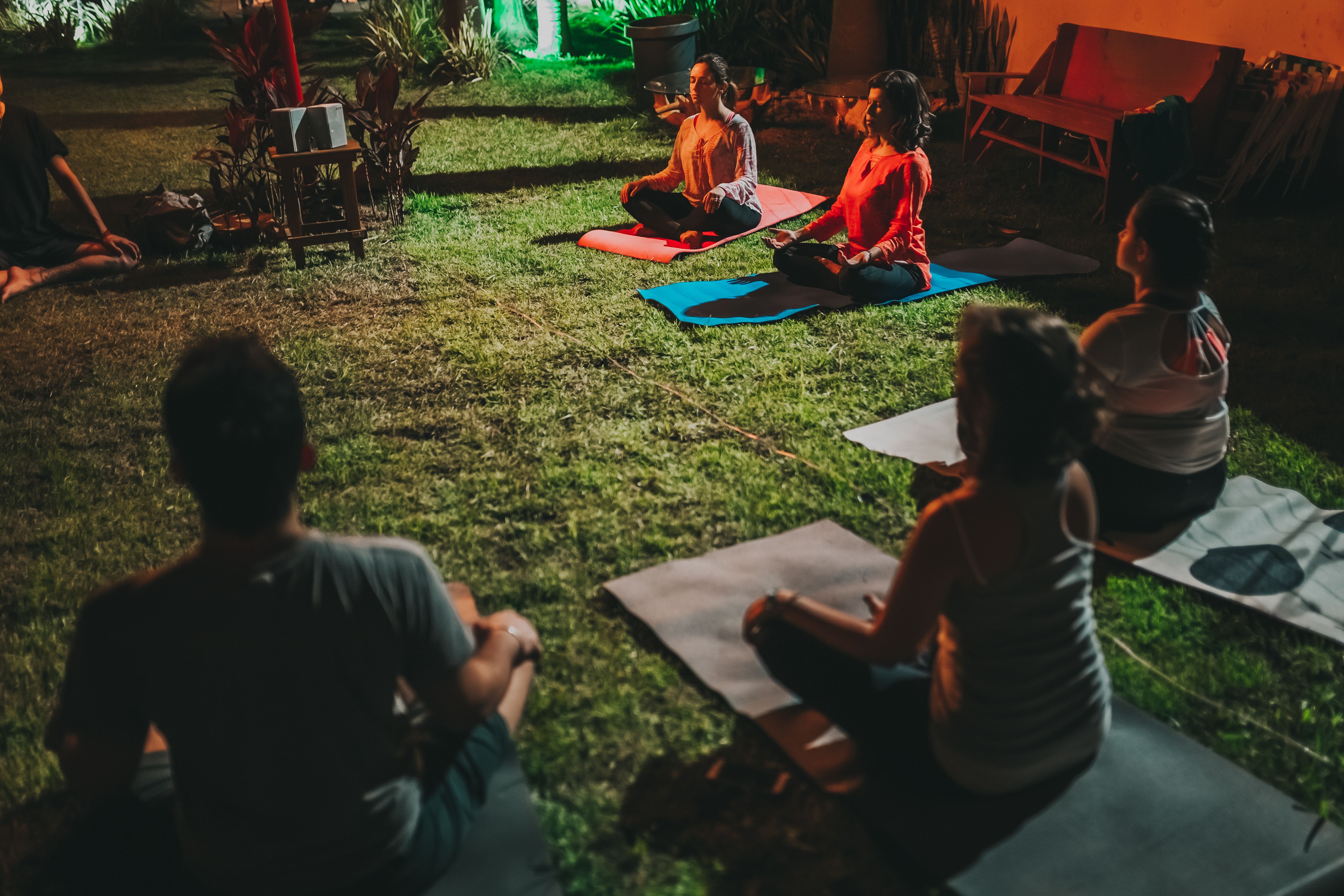
I host private, customized group workshops designed to offer a
grounded, peaceful space for shared meditation, somatic awareness, and
inner exploration. If you wish to arrange a private group workshop, I
would be honored to connect with you.
Resources
Recommanded Readings
Buddhist Wisdom & Mindfulness
The Dhammapada (Acharya Buddharakkhita)
The Joy of Living (Yongey Mingyur Rinpoche)
No Mud No Lotus (Thich Nhat Hanh)
When Things Fall Apart (Pema Chodron)
The Tibetan Book of Living and Dying (Sogyal Rinpoche)
Trauma, Somatics & The Nervous System
The Body Keeps the Score (Bessel Van der Kolk)
When the Body Says No (Gabor Maté)
Scattered Minds (Gabor Maté)
The Myth of Normal (Gabor Maté)
Waking the Tiger (Peter Levine)
In an Unspoken Voice (Peter Levine)
Anchored (Deb Dana)
Self-Inquiry and Inner Healing
Man’s Search for Meaning (Viktor E. Frankl)
Atlas of the Heart (Brene Brown)
Non-Violent Communication (Marshall Rosenberg)
No Bad Parts (Richard Schwartz)
Parenting from the Inside Out (Dan Siegel)
Loving What Is (Byron Katie)
The Forgiveness Project: Stories for a Vengeful Age (Marina
Cantacuzino)
Active Hope (Joanna Macy & Dr. Chris Johnstone)
Getting the Love You Want (Harville Hendrix)
The Buddha’s Words on Loving-Kindness - The Karaniya Metta Sutta
Translated by Venerable Acharya Buddharakkhita
Karaṇīyamatthakusalena, Yaṃ taṃ santaṃ padaṃ abhisamecca; Sakko
ujū ca suhujū ca, Sūvaco c'assa mudu anatimānī,
Santussako ca subharo ca, Appakicco ca sallahukavuttī; Santindriyo
ca nipako ca, Appagabbho kulesu ananugiddho,
Na ca khuddaṃ samācare kiñci, Yena viññū pare upavadeyyuṃ; Sukhino
vā khemino hontu, Sabbe sattā bhavantu sukhitattā.
Ye keci pāṇabhūtatthi, Tasā vā thāvarā vā anavasesā; Dīghā
vā ye mahantā vā, Majjhimā rassakā aṇukathūlā.
Diṭṭhā vā yeva adiṭṭhā, Ye ca dūre vasanti avidūre; Bhūtā
vā sambhavesī vā, Sabbe sattā bhavantu sukhitattā.
Diṭṭhiñca anupagamma, Sīlavā dassanena sampanno; Kāmesu
vineyya gedhaṃ, Na hi jātu gabbhaseyyaṃ punaretī ti.
Who seeks to promote his welfare, Having glimpsed the state of
perfect peace, Should be able, honest and upright, Gentle
in speech, meek and not proud.
Contented, he ought to be easy to support, Not over-busy, and
simple in living. Tranquil his senses, let him be prudent, And
not brazen, nor fawning on families.
Also, he must refrain from any action That gives the wise
reason to reprove him. (Then let him cultivate the thought:) May
all be well and secure, May all beings be happy!
Whatever living creatures there be, Without exception, weak or
strong, Long, huge or middle-sized, Or short, minute or
bulky,
Whether visible or invisible, And those living far or
near, The born and those seeking birth, May all beings be
happy!
Let none deceive or decry His fellow anywhere; Let none
wish others harm In resentment or in hate.
Just as with her own life A mother shields from hurt Her
own son, her only child, Let all-embracing thoughts For
all beings be yours.
Cultivate an all-embracing mind of love For all throughout the
universe, In all its height, depth and breadth — Love that
is untroubled And beyond hatred or enmity.
As you stand, walk, sit or lie, So long as you are awake, Pursue
this awareness with your might: It is deemed the Divine State
here.
Holding no more to wrong beliefs, With virtue and vision of the
ultimate, And having overcome all sensual desire, Never in
a womb is one born again.
Connect
You are welcome to take the first step.
Begin Here
If you feel drawn to reach out, you are welcome to say hello, ask a question, or simply get in touch. Whether you are looking for support, have a general inquiry, or have something else in mind, you are always welcome to write.
Your privacy matters to me. Anything you share will be held with care and respect.